
In my work in school communications, the strongest storylines usually take shape in the interactions that happen before anyone has a narrative in mind — during an impromptu classroom conversation, through a student’s academic curiosity, in a teacher’s gentle guidance.
Storytelling is one of the most meaningful responsibilities we have in public relations. The stories of an organization give shape to a mission, help audiences see a company’s values in action, and elevate the purpose of our work. In short, our connections to each other — built through the stories we share — convey the meaning behind the work we do.
My decades as a journalist for The Tennessean and the USA Today Network taught me to pay attention to the relational moments between people. I know to listen well and to keep asking questions until the meaning comes into focus. Now, as director of marketing and communications at Harpeth Hall in Nashville, I use that same expertise to tell the story of a school and the people whose mission is to educate girls and young women to think critically, lead confidently, and live honorably.
That work feels especially resonant during Women’s History Month.
Harpeth Hall’s history runs deep. The school’s story began six months after the Civil War ended, and decades before women had the right to vote, when Ward Seminary — a school for young women — opened in Nashville. The year was 1865, and only a handful of institutions in the country offered comprehensive education to prepare women for college. Ward Seminary was established before the founding of both all-boys school Montgomery Bell Academy and Vanderbilt University, making the women’s school a pacesetter in education at a time when Nashville was just beginning to build its reputation as the Athens of the South.
More than 160 years later, following a storyline from Ward Seminary to Ward-Belmont to what is now Harpeth Hall, the school’s history includes the remarkable stories of groundbreaking scientists, glass-ceiling-shattering military service members, record-setting Olympians, award-winning singers, and actresses-turned-entrepreneurs. In 2026, Harpeth Hall will celebrate 75 years on its current campus.
This month, in particular, I find myself thinking about that legacy — and about the role storytelling plays in carrying it forward. Storytelling in public relations, guided by the PRSA Code of Ethics, calls for communicating with clarity, accuracy, truthfulness, and respect for the individuals whose stories we are trusted to tell.
The people are the reason this work continues to matter so much to me. The tools we use to tell the stories will change. How people search for the content we produce will change. And, AI summaries will change how audiences encounter our work. The need for thoughtful storytelling, however, will remain. For those of us in PR, that is both the challenge and the opportunity: to tell stories that are faithful to the people at their center and be clear about the mission they reflect.
Here are a few ways I think about that in practice:
Strong storytelling starts with good reporting
Good stories do not begin with staged interactions and manufactured taglines; they begin with the day-to-day interactions. To capture those, we must interact with our employees and our customers. We must ask deeper questions, fill our notebooks with details, and resist the urge to rush past the reporting to the end product. The quality of the story depends on the quality of the listening that came before it.
Stories make strategy visible
Mission statements, strategic plans, and institutional priorities matter. Stories help people see those ideas unfold in day-to-day actions by translating broad messages into actual experiences.
Stories strengthen credibility
Credibility grows when stories are specific, honest, and grounded in tangible accounts. Audiences respond to substance. They trust organizations that communicate with care and transparency, rather than resorting to hyperbolic language or overpromising. They remember stories that feel like snapshots of real life — truthful and relatable.
Stories preserve continuity and history
Storytelling helps connect the daily work to a longstanding mission. It is important to record the individuals, moments, and milestones that shape a company or community over time. That kind of continuity builds understanding, belief, and trust in an institution, as well as a connection to a promise and the people behind the product.
The takeaway is clear: when we listen well and tell stories with intention, we do more than communicate. We help people understand why the work matters.
At Harpeth Hall, that means telling the stories of our students, faculty, and alumnae with care and depth, guided by a clear understanding of the history that shaped the school we know today. This work is a privilege. I am grateful every day for the opportunity to share the inspiring achievements of our girls — intelligent, ambitious, and determined — as they carry forward a legacy built by generations of women before them.
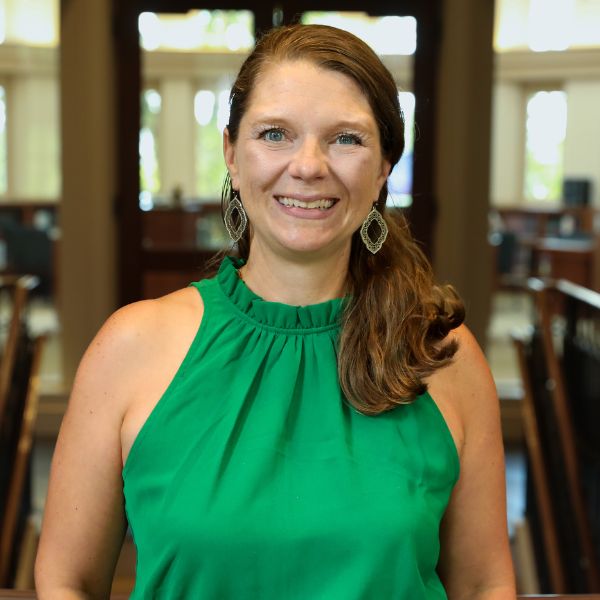
Jessica Bliss, APR, is a director-at-large on the PRSA Nashville Board of Directors.